


| Issue |
Aquat. Living Resour.
Volume 39, 2026
|
|
|---|---|---|
| Article Number | 8 | |
| Number of page(s) | 14 | |
| DOI | https://doi.org/10.1051/alr/2026002 | |
| Published online | 13 March 2026 | |
Research Article
Assessing the sustainability of frigate tuna (Auxis thazard) fisheries in Sri Lankan waters using length-based approaches
Marine Biological Resources Division, National Aquatic Resources Research & Development Agency (NARA), Crow Island, Colombo 15, Sri Lanka
* Corresponding authors: This email address is being protected from spambots. You need JavaScript enabled to view it.
; This email address is being protected from spambots. You need JavaScript enabled to view it.
Received:
17
April
2025
Accepted:
4
February
2026
Abstract
The frigate tuna holds a predominant position in the neritic tuna landings of Sri Lanka. Despite the importance of frigate tuna in fisheries, a declining trend in annual landings was observed in recent years. However, scientific assessments of the stock status and sustainability of frigate tuna fishery are extremely scarce in Sri Lankan waters. Considering the facts of the tendency of frigate tuna to thrive close to the continental shelf while having short-distance migrations and the existence of a single stock in Sri Lankan waters, two length-based approaches—Length-Based Indicators (LBIs) and Length-Based Spawning Potential Ratio (LBSPR)—were applied using forked length data from the Indian Ocean Tuna Commission database (2018-2022) to address the research gaps. The von Bertalanffy growth parameters were estimated at L∞ = 64.8 cm (FL); K = 0.521 yr−1; mean M = 0.925 yr−1. All the LBIs indicate a declining trend over the study period. The LBIs for the conservation of immature and mature individuals have fallen below the reference level since 2020. Furthermore, LBSPR results also indicated a declining trend which fell below the limit reference point of SPR 20% since 2020. The modes of the length distribution in the catch and the length (FL) at 50% and 95% selectivity also declined throughout the study period. All the model outcomes indicate the unsustainability of the fishery and overexploitation of the frigate tuna resource in Sri Lankan waters. The growing use of ring nets, contributing approximately 75% of the annual frigate tuna catch, is likely a key driver of the fishery’s unsustainability. To promote a sustainable fishery, immediate reductions in fishing mortality are required, which should include a halt to new licences for ring net fishing. Collaboration with the IOTC and neighbouring countries is crucial for regional resource management.
Key words: Length-based indicators / length-based spawning potential ratio / recruitment overfishing / purse seine / data-limited methods
Handling Editor: David Kaplan
© K. R. Dalpathadu, Published by EDP Sciences 2026
 This is an Open Access article distributed under the terms of the Creative Commons Attribution License (https://creativecommons.org/licenses/by/4.0), which permits unrestricted use, distribution, and reproduction in any medium, provided the original work is properly cited.
1 Introduction
Tunas and tuna-like species are key fishery resources in the Indian Ocean. In 2021, tunas and tuna-like fish remained the most prominent contributors, with total landings of 5.4 million tonnes. Small pelagic fish and mixed species, primarily reef-associated fish, followed (FAO, 2024). Neritic tunas represent a smaller subset of tunas, including species like the frigate tuna, kawakawa, bullet tuna, and long-tail tuna of the family Scombridae. They thrive in the shallow waters of the neritic zone, located above the continental shelf. Unlike their oceanic counterparts, which are well known for extensive migrations, neritic tunas remain closer to the coast, closely linked to continental shelf regions (Siriraksophon, 2017). Overall, the catches of the neritic tuna and seer fish species peaked at 683,000 tonnes in 2022 in the Indian Ocean, following a decline in 2019 (IOTC–WPNT14, 2024). Among those neritic tuna species in the Indian Ocean, frigate tuna (Auxis thazard (Lacepède, 1800)) is a key component in the catch. In 2022, the total catch of frigate tuna in the Indian Ocean was estimated to be 141,279 tons, accounting for approximately 21% of the total catch of neritic tuna and seer fish species (IOTC–WPNT14, 2024). The frigate tuna in the Indian Ocean is mainly caught using gillnet, followed by line and purse seine (IOTC–WPNT14, 2024), almost exclusively in coastal fleets (Lecomte et al., 2017).
Among the countries bordering the Indian Ocean, Sri Lanka is one of the oldest and most significant tuna-producing island nations (Maldeniya and Amarasooriya, 1998; Dissanayake et al., 2008). In Sri Lanka's coastal fishery, neritic tuna plays a pivotal role among the targeted tuna species (Haputhantri, 2016; Herath et al., 2019a). Notably, frigate tuna stands out as the most prominent species within the neritic tuna catch, accounting for 77.60% of the total in 2022 (National Aquatic Resources Research and Development Agency (NARA), 2024). About 15 yr ago, Sri Lanka contributed around 10% to the annual frigate tuna production in the Indian Ocean (Indian Ocean Tuna Commission (IOTC), 2024). However, over time, it has decreased to about 4% in 2022 due to the gradual decline in domestic annual landings over the last two decades (IOTC, 2024). Despite the signs of depletion in frigate tuna resources in Sri Lankan waters, no recent scientific studies have been conducted to assess the sustainability of the resource and the fishery.
As length-frequency data is readily available from the commercial catch in Sri Lanka, length-based methods assist in assessing stock status concerning reproductive capacity, sustainability, and current biomass (Filous et al., 2022; Pennino et al., 2022). Although length-based approaches lack the robustness of catch-based methods, they can still produce relatively unbiased and reliable estimates (Pons et al., 2020). Therefore, employing length-based methodologies, such as Length-Based Indicators (LBIs) (Froese, 2004; ICES, 2015) and the Length-Based Spawning Potential Ratio (LBSPR) (Hordyk et al., 2015), is both cost-effective and time-efficient for assessing the status and sustainability of data-limited neritic tuna fishery in Sri Lanka.
Aiming to evaluate the stock status and sustainability of the frigate tuna fishery in Sri Lankan waters, and despite limited data availability, the author of this study employed a combination of methods, including fishing mortality-based reference points and a length-based stock assessment. Based on these results, the author proposes potential management options to improve the sustainability of the frigate tuna fishery in Sri Lankan waters.
2 Methods
2.1 Data collection
The National Aquatic Resources Research and Development Agency (NARA) and the Department of Fisheries and Aquatic Resources (DFAR), Sri Lanka, have stationed trained field staff at major fishery harbours and landing sites to collect length and catch data for IOTC-listed species, including frigate tuna (Fig. 1). Under NARA's scientific supervision and in line with IOTC Resolution 15/02 (IOTC, 2023), daily fork length (FL) measurements (to the nearest 1 cm) are taken as vessels unload catch. The length data are fed to the large pelagic database (PELAGOS) databases maintained at NARA and are submitted as monthly length frequency data to the IOTC annually, along with other related catch data. Once submitted to the IOTC, the data is screened, and outliers may be removed and made publicly available for stock assessment purposes and published on the dedicated meeting pages for each IOTC Working Party (IOTC, 2024). The length-frequency data of frigate tuna in Sri Lankan waters from January 2018 to December 2022 were sourced from the IOTC database for this study (IOTC, 2024). A total of 14,308 FL data points were used for the analysis.
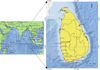 |
Fig. 1 (A): Position of Sri Lanka in the Central Indian Ocean. The outer margin of the Exclusive Economic Zone is also shown here. (B): The main fishery harbours in Sri Lanka that were used for the data collection. |
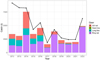 |
Fig. 2 The temporal variation in the frigate tuna catches by dominant fishing gears in Sri Lanka. The black line indicates the temporal variation in the annual catch of the frigate tuna in Sri Lanka (source: IOTC, 2024). |
2.2 Allometric growth and size at maturity (L50 and L95)
Since the length frequency data of FL (cm) were extracted from the IOTC database, growth and maturity parameters were obtained from previous studies conducted in Sri Lankan waters. Accordingly, the b value: the allometric growth parameter and a value: the scaling constant of the length-weight relationship, were obtained from Herath et al. (2019a) as follows:

Where a = 0.083; b = 3.430.
The estimated total length (TL) at which 50% of fish attained sexual maturity (L50) was obtained from a recent study in Sri Lankan waters by Herath (2019). The corresponding L95, which 95% of fish attained sexual maturity, was derived from the equation described by Prince et al. (2015) as follows:

The size at maturity values used in this assessment are tabulated in Table 2.
Those TL values were then converted into the corresponding FL values according to the length–length relationship described by Herath et al. (2019a) for further analysis as follows:

2.3 Estimation of growth parameters
The length-frequency data (FL) of the frigate tuna in Sri Lankan waters was grouped by monthly catches, assuming that the sample obtained reflects the monthly length distribution of the total catches. The length measurements comprise fish caught by ring nets, gill nets, hand lines, and long lines. Growth parameters (L∞, K, Ø) for both sexes combined were estimated using the von Bertalanffy growth function (VBGF) (von Bertalanffy, 1957). This analysis utilised monthly length-frequency data and was conducted using the electronic length frequency analysis (ELEFAN) feature provided by the R package TropFishR (Mildenberger et al., 2017; Taylor and Mildenberger, 2017) through the “Stock Monitoring Tool v 0.6” provided by the “iMarine Infrastructure Gateway” (Assante et al., 2019). The von Bertalanffy growth equation was defined as follows (Sparre and Venema, 1998):

Where Lt is the FL (cm) at age t (year), L∞ is the asymptotic length (cm), K is the growth coefficient, and t0 is the theoretical age at zero length (year−1).
To analyse the dataset, a moving average (MA) of 3 was applied to visually emphasise distinct peaks, especially in smaller length classes. A bin size of 2.6 was chosen, as recommended by Wang et al. (2020). This approach, based on the maximum total length (Lmax) observed in the dataset, was employed to minimise noise through aggregation.

2.4 Empirical estimates of natural mortality (M)
The natural mortality (M) for the frigate tuna in the Sri Lankan waters was obtained from the life history parameters L∞ and K and a mean annual temperature of the waters around Sri Lanka of 28 °C (Govil and Naidu, 2011). These parameters were applied to the R package TropFishR (Mildenberger et al., 2017; Taylor and Mildenberger, 2017) to obtain estimates of M with the following empirical equations developed by Pauly (1980a), Then et al. (2015), Gislason et al. (2010) and Lorenzen et al. (2022).




Where M is the estimated natural mortality rate, K is the von Bertalanffy growth coefficient, L∞ is the mean asymptotic length, T is the mean annual water temperature in °C, Lref is a reference length, often taken as the mean or median length of the fish in the population and L is the length of the individual fish or the average length of the fish in the population.
The maximum, minimum and mean value from these four empirical equations were then used as the values for M in the length-based stock assessment of this species.
2.5 Length-Based Indicators (LBIs)
The Length-Based Indicators (LBI) method, designed for screening length composition in catch or landings, supports stock classification with an emphasis on conservation, yield optimisation, and Maximum Sustainable Yield (MSY) (Froese, 2004; ICES, 2018; Shephard et al., 2018). This study assessed eight LBIs (Tab. 1), each representing the ratio of a measured length statistic to a threshold linked to exploitation or life history. These indicators collectively inform the overall stock status. Input parameters included life history traits derived from the von Bertalanffy Growth Function (L∞, K), length at 50% maturity (L50), mean natural mortality (M), and length-weight relationship parameters ‘a’ and ‘b’ values. LBI values were calculated annually using the R-script LBIindicators.R (ICES, 2018) through the “Stock Monitoring Tool v 0.6” provided by the “iMarine Infrastructure Gateway” (Assante et al., 2019) for the exploited frigate tuna population in Sri Lankan waters.
Derivation of LBIs as applied to frigate tuna stocks in Sri Lankan waters. Table adapted from ICES (2018).
2.6 Fishing mortality-based reference points and exploitation ratio
Fishing mortality (F)-based biological reference points (BRPs) are widely used to assess overfishing (Sainsbury, 2008). In data-limited fisheries, where estimating FMSY is difficult, proxies like Fmax and F0.1—derived from the Beverton and Holt (1956) yield-per-recruit model—are often applied. Fmax is the F that yields the maximum per recruit, while F0.1, a more conservative proxy for FMSY, is the F at 10% of the YPR curve's initial slope (Gulland and Boerema, 1973; Fukuda and Nakatsuka, 2019).
The Exploitation Ratio (E) indicates the percentage of a population caught within a specific timeframe, usually a year. It serves as a rough indicator to assess if a stock is being overexploited. The assumption is that a stock is ideally exploited when E = 0.5, corresponding to the condition where fishing mortality (F) equals natural mortality (M) (Gulland 1971). The exploitation ratio was estimated using the formula proposed by Gulland (1971) through the following relation:

where E is the exploitation ratio, i.e., the fraction of deaths caused by fishing. F = fishing mortality coincident. Z = total mortality rate.
2.7 The length-based spawning potential ratio (LBSPR) model
The Spawning Potential Ratio (SPR) measures the percentage of a stock's unfished reproductive potential remaining under specific fishing pressures (Walters and Martell, 2004). The LBSPR model estimates SPR using size composition data and life history parameters, assuming a steady-state exploited population. Globally, an SPR of 30–40% is a sustainable target reference point, while an SPR of 20% is the limit reference point, below which recruitment failure risk increases (Prince et al., 2020; Kindong et al., 2022a). For this analysis, life history parameters obtained from the von Bertalanffy Growth Function (L∞, K), estimated lengths at maturity (L50, L95), mean value of M, and length-weight relationship parameters (a, b) were used as inputs. Priors were derived from ELEFAN GA bootstrap (TropFishR) based on size at maturity. The LBSPR model employs maximum likelihood to estimate selectivity parameters (LS50, LS95) and relative fishing mortality (F/M), ultimately determining SPR. To account for length-based selectivity and Lee’s Phenomenon, the growth-type-groups (GTG)-LBSPR model was applied, referred to hereafter as “LBSPR.” Analyses were conducted using the LBSPR R package (Hordyk, 2019) through “Stock Monitoring Tool v 0.6” provided by the “iMarine Infrastructure Gateway” (Assante et al., 2019).
2.8 Assumptions for the LBI and LBSPR models
The LBSPR and LBI models function within an equilibrium framework and rely on several assumptions that must often be made arbitrarily in data-poor fisheries. These assumptions include: (i) representative length measurements, (ii) constant recruitment and natural mortality as well as somatic growth and maturation over time, (iii) density-independent maturity, (iv) somatic growth follows VBG, and (v) closed population (Froese, 2004; Hordyk et al., 2015; ICES, 2018; Shephard et al., 2018).
2.9 “Stock Monitoring Tool v 0.6” provided by the “iMarine Infrastructure Gateway”
The Stock Monitoring Tool (SMT), developed by FAO, is an R-Shiny application, available to the global community and hosted via remote computational facilities with considerable processing resources. This tool was designed to allow users with little to no programming experience to run methods developed for data-limited situations to evaluate and monitor the sustainability of fish stocks. This Gateway is operated by D4Science.org (Assante et al., 2019).
3 Results
3.1 Length frequency distributions
The FL of frigate tuna during the study period ranged from 20 cm to 58 cm (Fig. 3). The mean annual FL ± SD of the landings from 2018 – 2022 was estimated at 39.3 ± 6.1 cm, 38.2 ± 5.4 cm, 33.6 ± 5.6 cm, 33.7 ± 5.7 cm, and 31.5 ± 4.4 cm, respectively. A decreasing trend in the modes of the frigate tuna length distribution in the landings was observed during the study period from 2018 to 2022 (Fig. 3).
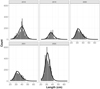 |
Fig. 3 Length frequency (FL) distribution of frigate tuna (n=14308) from 2018 to 2022 for each year obtained from the commercial catch in Sri Lanka. |
3.2 Estimation of growth parameters and natural mortality (M)
The mean von Bertalanffy predicted growth parameters were estimated at 64.8 cm FL for L∞: 0.521 yr−1 for the K and 0.167 for the Ø (Tab. 2 and Fig. 4). The best score value (Rn) in the ELEFAN procedure within the TropFishR package for the above estimations was 3.34. The estimated M varied from 0.65 yr−1 to 1.18 yr−1 (Tab. 2). The mean M was estimated at 0.925 yr−1.
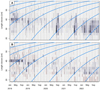 |
Fig. 4 Uploaded raw (A) and restructured (B) length-frequency data with overlaid von Bertalanffy growth (VBG) curves fitted by ELEFAN with a genetic algorithm. |
Estimates of life-history parameters for frigate tuna in Sri Lankan waters utilised in the stock assessment.
3.3 Fishing mortality-based reference points and exploitation ratio (E)
The estimated fishing mortality-based reference points, exploitation ratio and the stock status in terms of the current fishing mortality are given in Table 3. The calculated F for the frigate tuna in Sri Lankan waters during the study period is greater than the estimated Fmax and the target reference points of F0.1. Also, the estimated E is greater than the ideal exploitation level of E = 0.5.
The estimated fishing mortality based on reference points and the estimated stock status in terms of the current fishing mortality of the frigate tuna in Sri Lankan waters.
3.4 Estimation of stock status of frigate tuna and the sustainability of the fishery in Sri Lankan waters
3.4.1 Estimates provided by the LBI Model
The outcome for the mean M of the model indicates that the average length of the largest 5% of individuals in the frigate tuna stock has decreased (Lmax5%/L∞) and fallen below the limit reference level since 2020. Furthermore, the larger individuals (L95%/L∞) and spawners (Pmega) were well below the limit reference level throughout the study period with a declining trend. In analysing the indicator ratios pertaining to immature individuals within the frigate tuna stock (L25%/Lmat, Lc/Lmat, and Lmean/Lopt), it was observed that a declining trend persisted throughout the study period, falling below the limit reference level following the year 2020. When evaluating the fishery against the Maximum Sustainable Yield (MSY) (Lmean/LF=M) and the Optimum Yield (Lmaxy/Lopt), the resulting indicators were below the threshold levels throughout the study period (Fig. 5 and Tab. 4). A similar declining trend was observed in the LBIs for the minimum and maximum M values (Fig. 5 and Tab. 4). Although the estimates for the Optimum Yield (Lmaxy/Lopt) with minimum and mean M values highlight the unsustainability of the fishery, the estimate with maximum M indicates a sustainable fishery for the study period (Fig. 5C). The LBIs for the conservation of mature and immature individuals estimated with upper and lower levels of the M, fell below the reference levels, especially since 2020.
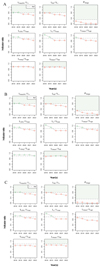 |
Fig. 5 Estimated length-based indicators relative to reference levels as a point for each year. The expected values for each LBI ratio are represented as dashed horizontal lines. The horizontal line represents a limit reference point, and any value above the limit reference point is considered desirable. A – for mean M; B – for maximum M; C – for minimum M. |
3.4.2 Estimates provided by the LBSPR model
The estimated SPR using the mean value of the M during the study period was well below the target reference point of SPR 40% (Tab. 5 and Fig. 6). A declining trend in the estimated SPR has been observed since 2018, leading to a fall in the SPR below the limit reference point of SPR 20% since 2020. Furthermore, a similar declining trend was observed in the length at which 50% (Ls50) and 95% (Ls95) of individuals were selected for the fishery (Tab. 5). Considering the F/M, an increasing trend was observed from 2018 to 2021, while increasing to a relatively higher value in 2022 (Fig. 6). A similar declining trend in LBSPR, selectivity (Ls50 and Ls95), and an increasing trend in F/M were observed for the minimum and maximum M values during the study period (Fig. 6). In 2022, SPR between 5% and 11% were obtained with the minimum and maximum estimates of the M, respectively.
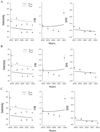 |
Fig. 6 Time series plot of the estimated selectivity parameters in cm, fishing mortality relative to natural mortality, and spawning potential ratio (SPR) with 95% confidence intervals. The lines correspond to the smoothed estimates over time. A – for mean M; B – for maximum M; C – for minimum M. |
The estimated LBSPR, selectivity parameters (Ls50 and Ls95), and the ratio of fishing to natural mortality rate (F/M). The estimated 95% confidence interval for each parameter is provided in brackets.
4 Discussion
Frigate tuna is a neritic tuna species that tends to stay closer to the coast and is more associated with continental shelf areas (Siriraksophon, 2017). Unlike other oceanic tuna species, it performs shorter-distance migrations, especially during spawning seasons (Kumar, 2012; Zhou et al., 2022). Coastal pelagic fish generally exhibit more significant geographic population subdivisions than oceanic species. This is attributed to their specific habitat requirements, shorter migration distances, and increased vulnerability to climatic variations (Rossi et al., 1998). Scientific studies have concluded that a single stock of frigate tuna thrives in Sri Lankan waters (Herath et al., 2019b). Considering these facts, it is crucial to assess the frigate tuna stock in Sri Lankan waters and implement effective management measures to ensure the sustainability of the resource in Sri Lankan waters (Zimmermann and Werner, 2019; Hilborn et al., 2020). This study could be the first attempt to apply the length-based, data-limited methods of LBSPR and LBIs to assess the sustainability of the frigate tuna stock in Sri Lankan waters.
Acknowledging the limitations of relying on a single data-limited approach for estimating stock status (Herrón et al., 2018; Kindong et al., 2022a), this study employed two complementary methodologies—LBIs and LBSPR. It is believed that these approaches provided robust estimates by applying length data collected from over 14,000 samples per population during the study period. Frigate tuna in Sri Lankan waters is harvested using various methods, including ring nets, gill nets, longlines, and handlines (NARA, 2024). Ring nets tend to capture a wide range of sizes, similar to trawl nets (Bhanja et al., 2024). Since most of the catch was generated from the ring nets accompanied using different hook and mesh size combinations, a sigmoidal selectivity pattern seen in trawl fleets was assumed for estimating von Bertalanffy growth parameters (Taylor and Mildenberger, 2017). According to the IOTC Resolution 15/02, each contracting party (CPC) (including Sri Lanka) is responsible for providing at least one length measurement (with other related data) of a randomly selected fish for one ton of catch. The compliance rate of Sri Lanka in this regard has been improved, and during the study period, it was around 80%. Sri Lanka was in the ‘green zone’ (‘green’ indicates CPCs that have benefited from the Compliance Support Mission (CSM) and follow-up of CSM), and the compliance rate was recognised to be increasing (IOTC, 2023). Therefore, it was believed that the length frequency data used in this assessment was representative of the neritic tuna catch in Sri Lanka.
4.1 The fishery for frigate tuna in Sri Lankan waters
In Sri Lankan waters, approximately 75% of the total annual frigate tuna catch to date has been primarily obtained using ring nets, a type of surrounding net, while smaller quantities are captured through alternative fishing methods such as gill nets, longlines, and handlines (IOTC, 2024; NARA, 2024). Ring nets are mainly operated by multi-day fishing vessels ranging from 9.8 m to 18.3 m in length, with inboard engines and fish for more than one day in the ocean (Haputhantri and Maldeniya, 2011). Those multi-day boats can operate up to the EEZ and occasionally in international waters. The ring net fishery mainly targets fish schools of about 19 fish species associated with floating objects (drifting Fish Aggregating Devices (dFAD)) such as rough triggerfish (Canthidermis maculata), Indian scads (Decapterus russelli), and rainbow runner (Elagatis bipinnulata), along with frigate tuna (A. thazard) (Kanchanamala et al., 2018; Gunwardane et al., 2024).
In addition to the multi-day boats, smaller fishing vessels operating in coastal waters also engage in the neritic tuna fishery using ring nets. They are namely ‘I-day Boats with inboard engine’ (8.8 m—12.2 m in length), ‘Fibre Reinforced Plastic (FRP) Boats with outboard engine’ (5.5 m—7.2 m in length), and ‘Motorized Traditional craft’ with smaller outboard engine (11 m—14 m in length) (Haputhantri and Maldeniya, 2011). These smaller fishing vessels target free-swimming schools of frigate tuna, kawakawa (Euthynnus affinis, scads (Selar spp.), bullet tuna (Auxis rochei) and occasionally spotted sardinella (Amblygaster sirm) and Indo-Pacific sailfish (Istiophorus platypterus). The fishing grounds are within 3-8 km of the coast (Maldeniya and Dayaratne, 1996). However, the fishery is restricted to a few locations along the southern, southeastern and eastern coast of Sri Lanka, and only a few vessels operate regularly at each centre (Maldeniya and Dayaratne, 1996).
Gill nets and hand lines targeting neritic tunas are typically used by small boats operating for less than a day. In recent years, ring nets have become increasingly common in Sri Lanka's fishery for schooling pelagic species. Many multi-day boats now carry ring nets alongside gill nets and longlines (Ariyarathna and Amarasinghe, 2012). Vessels traditionally targeting tunas are shifting to ring nets due to their higher profitability (Ariyarathna and Amarasinghe, 2012; Chathurika and Dissanayake, 2016). This shift is evident in the growing share of frigate tuna caught using ring nets over the past decade (IOTC, 2024) (Fig. 2).
4.2 Life history and natural mortality of frigate tuna in Sri Lankan waters
Life history parameters are critical in evaluating fish stock status and formulating effective management strategies. The outcomes of this study's estimates of life history parameters are relatively consistent with contemporary early research on the growth of the frigate tuna in Sri Lankan waters, where Joseph and Maldeniya (1988) estimated the von Bertalanffy growth parameters to be L∞ = 59.0 cm (FL); K = 0.51 yr−1. However, some studies highlight that frigate tuna populations in Indian waters grow faster and attain larger sizes; Mudumala et al. (2018) estimated L∞ = 47.4 cm (TL); K = 1.35 yr−1; Azeez et al. (2024) estimated L∞ = 72.6 cm (TL); K = 0.73 yr−1. Environmental conditions such as high temperatures, food availability and genetic differences could induce the growth rate of frigate tuna (Pauly, 1980b; Waples and Gaggiotti, 2006; Zhou et al., 2022). Therefore, the difference in the K of the frigate tuna between Sri Lankan and Indian waters may further validate the potential for a distinct frigate tuna stock in Sri Lankan waters (Pauly, 1980a).
4.3 Sustainability status of frigate tuna resource in Sri Lankan waters
Changes in the size structure of fish caught over time can provide valuable insights into fishing pressure. The decreasing trend in the modes in the length frequency distributions over the study period may indicate high fishing pressure on the frigate tuna resource (Gulland, 1983) in Sri Lankan waters (Fig. 3). Furthermore, the declining trend in length at 50% and 95% selectivity (LS50 and LS95) (Tab. 5) indicates a decline in the average size of fish that become vulnerable to fishing gear and are caught over time. It is a significant observation in fisheries management as it may reflect changes in fishing practices, gear selectivity, or population dynamics (King, 2007). Ring nets are widely acknowledged for their significant proportion of immature catches, both in Sri Lanka and on a global scale (Chathurika and Dissanayake, 2016; Phillips et al., 2017). The increasing use of ring nets may be contributing to the observed decline in the mean size, LS50 and LS95, of frigate tuna catches in Sri Lankan waters over time.
The higher F for the frigate tuna stock in Sri Lankan waters compared to the target reference point (TRP) of Fmax and F0.1 (Tab. 3) suggests that the frigate tuna stock is probably overfished (Gulland, 1983). As the F exceeds the Fmax, the yield per recruit of the frigate tuna stock could be declining as the fish are caught before they grow to a size that would maximise yield. The consequence would become more severe as the F surpasses a precautionary threshold of F0.1. Thus, the long-term sustainability of the frigate tuna stock would be at risk due to the decline of recruitment and spawning biomass in Sri Lankan waters. The unsustainable nature of the fishery was further evidenced by an exploitation rate (E) exceeding the threshold value of 0.5, which is commonly regarded as the upper limit for sustainable exploitation (Tab. 3).
LBIs play a vital role in maintaining healthy fish populations and supporting sustainable fisheries management (Medeiros-Leal et al., 2023). The results of the LBIs estimated with mean M for the conservation of the immature individuals of the frigate tuna populations in Sri Lanka (Tab. 1) exhibited a declining trend over the study period (Fig. 5). The elevated fishing pressure by the ring net fishery in Sri Lankan waters could be the reason for the unsustainable removal of immature individuals. Such juvenile removal threatens stock replenishment, disrupts marine food webs (Smalås et al., 2020), and may cause economic losses due to reduced future yields and lower market value of undersized fish (Vasilakopoulos and Marshall, 2011).
Mature frigate tuna in Sri Lankan waters are being harvested unsustainably, as shown by LBIs based on mean M falling below reference levels (Tab. 1; Fig. 5). Apart from the LBIs, the LBSPRs for the study period also emphasise the unsustainability in the harvesting of the frigate tuna resource with special reference to the spawning potential of the mature individuals. The resulting SPR, based on the mean estimate of M, indicates a declining trend that has consistently remained below the target reference point of 40% SPR and has fallen below the limit reference point of 20% SPR since 2020 (Tab. 5), suggesting potential unsustainability of the fishery (Prince et al., 2020; Kindong et al., 2022a). As observed in this study, the high frequency of immature frigate tunas in the catch significantly increases the likelihood of low SPR values. With frigate tunas being captured at such small sizes (LS50 and LS95), the availability of larger, mature individuals necessary to sustain the 40% SPR threshold is severely limited. This imbalance threatens to trigger recruitment overfishing, jeopardising the population's long-term viability (Filous et al., 2022). Additionally, the F/M ratio exceeded 2.0 throughout the period, peaking at 4.36 in 2022, indicating severe overexploitation and a potential fishery collapse (Hilborn and Walters, 1992; Medeiros-Leal et al., 2023). LBIs related to optimal yield and MSY also remained below reference levels, reinforcing the unsustainable status of the fishery.
Accurate estimation of natural mortality (M) is critical for assessing fish population dynamics, as stock assessment models like LBIs and LBSPR are highly sensitive to M (Then et al., 2015; Filous et al., 2022). To address this uncertainty, the author assessed LBIs and LBSPR across a range of M values. Across all scenarios, results showed declining trends and values falling below reference points, indicating an unsustainable fishery, especially since 2020. Even with the highest M value, LBIs for immature and mature conservation remained below targets, though the ‘Optimum yield’ LBI stayed within sustainable levels (Fig. 5). SPR estimates similarly declined across M values: with high M, SPR was 44% in 2018 (above the target), but dropped below 20% by 2022. With low M, SPR fell below the limit from 2019 onward (Tab. 5). These findings imply that newly recruited frigate tuna are being caught before reaching reproductive size or market value, undermining stock sustainability (Prince et al., 2020; Kindong et al., 2022a).
4.4 Management recommendations
In addition to the harmful effects of capturing juvenile fish, the use of surrounding nets with floating objects (fish aggregation devices (FADs)) to catch free-swimming schools of fish, such as frigate tuna, has been associated with several negative consequences, notably increased fishing pressure and changes in stock distribution patterns (Ariyarathna and Amarasinghe, 2012; Pons et al., 2023). Therefore, to mitigate these risks, the implementation of input control methods, such as effort restrictions and license limitations, is recommended. Wimalasena and Vidanage (2005) recommended increasing the license fee for the ring net users to manage the small tuna fishery in Sri Lanka. Additionally, refraining from issuing new licenses for ring net operations may help mitigate fishing pressure.
Conducting scientific research is promoted, especially on identifying potential spawning grounds, nursery grounds, spawning seasons and estimating the biomass of frigate tuna in Sri Lankan waters. Seasonal and spatial closures in identified spawning and nursery grounds could provide additional protection for juvenile stocks and support long-term sustainability. Lessons from other fisheries highlight the effectiveness of such measures. For example, spatial closures in the Western and Central Pacific Ocean have been implemented to protect juvenile tuna and prevent localised depletions (Sibert et al., 2012). Applying a similar approach in Sri Lanka, informed by robust scientific data, could yield significant conservation benefits.
Alongside the national-level management initiatives, Sri Lanka should actively engage with IOTC to advocate for science-based management measures that ensure sustainable frigate tuna exploitation across the Indian Ocean. Collaborative data-sharing efforts with neighbouring countries would enhance the understanding of stock dynamics and migration patterns, leading to more effective conservation strategies. Some of the successful regional cooperation in tuna management demonstrated by the IOTC to protect tuna stocks from overexploitation are the regional observer scheme under resolution 11/04, joint efforts in combating IUU fishing, development of regional capacity and training (IOTC, 2023). By implementing a combination of national-level regulatory measures, Sri Lanka can take significant steps toward ensuring the long-term sustainability of its frigate tuna fisheries.
Given the uncertainty associated with the length data used for this assessment (IOTC–WPNT14, 2024) and as the outcomes of this study are derived from the data-limited methods, a precautionary approach is recommended. Further research should focus on conducting robust, full analytical stock assessments using age/length-structured or production models to improve biomass estimates for the frigate tuna resource in Sri Lankan waters (ICES, 2022). Furthermore, due to the uncertain population structure of frigate tuna across neighbouring countries in the Indian Ocean, a preliminary investigation is urgently required in the future, ideally conducted under the IOTC or a regionally based management initiative.
5 Conclusions
The assessment of the sustainability of the frigate tuna resource and fishery in Sri Lanka using two data-limited, length-based approaches, LBSPR and LBIs, revealed that the fishery is unsustainable while the resource is being over-exploited. The increasing fishing pressure exerted by the ring net fishery in Sri Lanka may be responsible for this situation. In addition to the elevated fishing pressure, some other factors, such as habitat shifts of frigate tuna due to alterations in the favourable environmental conditions in Sri Lankan waters, might be attributed to the decline in the catch. To regain the sustainability of the fishery, it is recommended to apply some input control measures such as suspending the issuance of new licenses for the ring net fishery, and building up a co-management system incorporating the citizen science concept. Conducting more scientific research is advised, especially focusing on fishery-independent surveys. Collaborative work with the IOTC and neighbouring countries is essential to manage the resources at the regional level.
Acknowledgments
I would like to express my sincere gratitude to Dr. Anika Sonjudóttir of the Marine and Freshwater Research Institute, Iceland and Dr. S.S.K. Haputhantri of the National Aquatic Resources Research and Development Agency (NARA), Sri Lanka, for their valuable comments and guidance in preparing the manuscript. I also wish to thank all the Research Assistants and the Field Research Assistants of the Marine Biological Resources Division of NARA, and the Fisheries Inspectors, Fisheries Officers and Onboard observers of the Department of Fisheries and Aquatic Resources (DFAR) in Sri Lanka for their valuable support in the data collection process. The data collection process is supported by the Treasury of the Government of Sri Lanka.
Data availability statement
The data is freely available on the IOTC web site (https://iotc.org/).
References
- Ariyarathna MM, Amarasinghe US. 2012. A fishery associated with floating objects in the Indian Ocean off Southern Sri Lanka. Asian Fish Sci 25: 278–289. [Google Scholar]
- Assante M, Candela L, Castelli D, Cirillo R, Coro G, Frosini L, Lelii L, Mangiacrapa F, Pagano P, Panichi G, Sinibaldi F. 2019. Enacting open science by D4Science. Future Gener Comput Syst 101: 555–563. [Google Scholar]
- Azeez PA, Abdussamad EM, Rajesh KM, Chellappan A, Nakhawa AD, Surya S, Koya M, Ghosh S, Manas HM, Rohit P. 2024. Fishery, biology and population characteristics of frigate tuna Auxis thazard (Lacepede, 1800) from Indian waters. Indian J Fish 71: 64–69. [Google Scholar]
- Beverton RJH, Holt SJ. 1956. A review of methods for estimating mor tality rates in fish populations, with special references to sources of bias in catch sampling. Rapports et Procès-Verbaux des RèunI ons Commission Internationale pour l’Exploration. Scientifique de la Mer Méditerranée. 140: 67–83. [Google Scholar]
- Bhanja A, Payra P, Mandal B. 2024. A study on the selectivity of different fishing gear. Indian J Pure Appl Biosci 12: 8–19. [Google Scholar]
- Chathurika KBE, Dissanayake DCT. 2016. Initial study on catch, species composition and reproductive biology of fishes off the south‐west coast of Sri Lanka, targeted by ring nets while utilizing natural floating objects. J Appl Ichthyol 32: 464–470. [Google Scholar]
- Dissanayake DCT, Samaraweera EKV, Amarasiri C. 2008. Fishery and feeding habits of yellowfin tuna (Thunnus albacares) targeted by coastal tuna longlining in the northwestern and northeastern coasts of Sri Lanka. Sri Lanka J Aquat Sci 13: 1–21. [Google Scholar]
- FAO. The State of World Fisheries and Aquaculture 2024 – Blue Transformation in action, FAO, Rome, 2024. https://doi.org/10.4060/cd0683en [Google Scholar]
- Filous A, Daxboeck C, Beguet T, Cook C. 2022. The life history of longnose emperors (Lethrinus olivaceus) and a data-limited assessment of their stock to support fisheries management at Ran giroa Atoll, French Polynesia. J Fish Biol 100: 632–644. [Google Scholar]
- Froese R. 2004. Keep it simple: three indicators to deal with overfishing. Fish Fish 5: 86–91. [Google Scholar]
- Fukuda H, Nakatsuka S. 2019. Review of biological reference points with specific recommendations for Pacific Bluefin tuna, in: Working document submitted to the ISC Pacific Bluefin Tuna Working Group, International Scientific Committee for Tuna and Tuna-Like Species in the North Pacific Ocean (ISC), from 18–22 March 2019, Jeju, Korea [Google Scholar]
- Gislason H, Daan N, Rice JC, Pope JG. 2010. Size, growth, temperature and the natural mortality of marine fish. Fish Fish 11: 149–158. [CrossRef] [Google Scholar]
- Govil P, Naidu PD. 2011. Variations of Indian monsoon precipitation during the last 32 kyr reflected in the surface hydrography of the Western Bay of Bengal. Quat Sci Rev 30: 3871–3879. [Google Scholar]
- Gulland JA. The Fish Resources of the Ocean. Fishing News (Books) Ltd, Surrey, England, 1971. [Google Scholar]
- Gulland JA, Boerema LK. 1973. Scientific advice on catch levels. Fish Bull 71: 325–335. [Google Scholar]
- Gulland JA. 1983. Fish Stock Assessment: A Manual of Basic Methods. FAO/Wiley Series on Food and Agriculture, Vol. 1. Wiley, New York. [Google Scholar]
- Gunwardane ND, De Croos MDST, Amarasinghe US. 2024. Recent declining trends in pelagic fish catches in the indian ocean off Sri Lanka: is gill oxygen limitation theory (GOLT) a possible explanation? Asian Fish Sci 37: 60-80. [Google Scholar]
- Haputhantri SSK, Maldeniya R. 2011. A review on billfish fishery resources in Sri Lanka, in: IOTC (Ed.), Report of the Ninth Session of the Indian Ocean Tuna Commission (IOTC) Working Party on Billfish (WPB), Mahé, Seychelles, IOTC–2011–WPB09–28. [Google Scholar]
- Haputhantri SSK. 2016. Exploring gear-vessel catch efficiency of frigate tuna (Auxis thazard) in tuna fishery of Sri Lanka, in: IOTC (Ed.), Report of the Sixth Session of the Indian Ocean Tuna Commission (IOTC) Working Party on Neritic Tunas (WPNT), Mahé, Seychelles, IOTC2016WPNT06-20. [Google Scholar]
- Herath DR. Molecular Identification, Study of Biology and Stock Structure of Three Common Neritic Tuna Species Found in Sri Lankan Waters. PhD dissertation, University of Colombo, Sri Lanka, 2019. [Google Scholar]
- Herath D, Perera C, Hettiarachchi C, Murphy B. 2019a. Length-weight and length-length relationships of three neritic tuna species of Sri Lankan coastal waters. Int J Fish Aquat Stud 7: 129-133. [Google Scholar]
- Herath DR, Perera HACC, Hettiarachchi GHCM. 2019b. Some biological aspects and molecular variations in frigate tuna, Auxis thazard of the coastal waters around Sri Lanka. J Natl Sci Found Sri Lanka 47: 333–340. [Google Scholar]
- Herrón P, Mildenberger TK, Diaz JM, Wolff M. 2018. Assessment of the stock status of small scale and multi-gear fisheries resources in the tropical Eastern Pacific region. Reg Stud Mar Sci 24: 311–323. [Google Scholar]
- Hilborn R, Walters CJ. Quantitative Fisheries Stock Assessment: Choice, Dynamics, and Uncertainty, Springer, USA, 1992. https://doi.org/10.1007/978-1-4615-3598-0 [Google Scholar]
- Hilborn R, Amoroso RO, Anderson CM, Baum JK, Branch TA, Costello C, De Moor CL, Faraj A, Hively D, Jensen OP, Kurota H. 2020. Effective fisheries management instrumental in improving fish stock status. Proc Natl Acad Sci USA 117: 2218–2224. [Google Scholar]
- Hordyk A, Ono K, Valencia S, Loneragan N, Prince J. 2015. A novel length-based empirical estimation method of spawning potential ratio (SPR) and tests of its performance for small-scale, data-poor fisheries. ICES J Mar Sci 72: 217–231. [Google Scholar]
- Hordyk A. 2019. LBSPR: length-based spawning potential ratio. R package version 0.1.5. https://CRAN.R-project.org/package=LBSPR [Google Scholar]
- ICES. 2015. Report of the fifth workshop on the Development of Quantitative Assessment Methodologies based on life-history traits, exploitation characteristics, and other relevant parameters for data-limited stocks (WKLIFE V) (Version 1). https://doiorg/10.17895/ices.pub.19283927.v1. ICES Expert Group reports (until 2018) [Google Scholar]
- ICES. 2018. ICES Technical guidance for providing reference points for stocks in categories 3 and 4. ICES Technical Guidelines. https://doi.org/10.17895/ices.pub.4128 [Google Scholar]
- ICES. 2022. Advice on fishing opportunities. In Report of the ICES Advisory Committee, 2022. ICES Advice 2022, section 1.1.1. https://doi.org/10.17895/ices.advice.19928060. [Google Scholar]
- Indian Ocean Tuna Commission (IOTC). 2023. Report of the 20th Session of the Compliance Committee. In person & by videoconference, 30 April to 2 May & 4 May 2023. IOTC–2023–CoC20–R[E], 65 pp. Available at: https://iotc.org/documents/report-20th-session-compliance-committee [Google Scholar]
- Indian Ocean Tuna Commission (IOTC). 2024. AVAILABLE DATASETS in Indian Ocean Tuna Commission. Available at: https://iotc.org/data/datasets. (Accessed on 12/06/2024) [Google Scholar]
- IOTC–WPNT14. 2024. Report of the 14th Session of the IOTC Working Party on Neritic Tunas. Seychelles, IOTC. Available at: https://iotc.org/documents/WPM/14/RE. (Accessed on 12/06/2024) [Google Scholar]
- Joseph L, Maldeniya R. 1988. Fishery of kawakawa and frigate tuna, their age and growth, in: Studies of the tuna resources in the EEZs of Maldives & Sri Lanka. BOBP/REP/41. (Online), Bay of Bengal Programme, FAO, India, pp. 123–140. Available at: Studies of the Tuna Resource in the EEZs of Sri Lanka and Maldives - BOBP/REP/41 (Accessed on 12/06/2024) [Google Scholar]
- Kanchanamala GPC, Deepananda KHMA, Cumaranatunga PRT. Species composition and catch per unit effort (CPUE) of the offshore fishery, operated from the Galle fishery harbour, Sri Lanka, in: Open University International Research Sessions (iOURS 2018) (Online). Open University, Colombo, Sri Lanka, 2018, pp. 108–109. Available at: COVER_IOURS 2018 final (Accessed on 12/06/2024) [Google Scholar]
- Kindong R, Sarr O, Wu F, Tian S. 2022a. Length-based assessment methods for the conservation of a pelagic shark, Carcharhinus falciformis from the tropical pacific ocean. Fishes 7: 1–15. [Google Scholar]
- Kindong R, Wu F, Sarr O, Dai L, Tian S, Dai X. 2022b. Life history of wahoo, Acanthocybium solandri, in the Tropical Eastern Atlantic Ocean–the importance of applying a suite of methods for fisheries assessment in data-limited situations. Oceanol Hydrobiol Stud 51: 115–132. [Google Scholar]
- King M. Fisheries Biology, Assessment and Management, 2nd edn, Wiley-Blackwell, Oxford, UK, 2007. https://doi.org/10.1002/9781118688038. [Google Scholar]
- Kumar G. Genetic Variation in Two Tuna Species Euthynnus Affinis Cantor and Auxis Thazard Lacepede along the Indian Coast. (Thesis), Goa University, India, 2012. Available at: http://hdl.handle.net/10603/125825. (Accessed on 08/01/2025) [Google Scholar]
- Lecomte M, Rochette J, Laurans Y, Lapeyre R. 2017. Indian Ocean tuna fisheries: between development opportunities and sustainability issues. Développment Durable & Relations Internationales, IDDRI: Paris, France) (Online). Available at https://www.iddri.org/sites/default/files/PDF/Publications/Hors%20catalogue%20Iddri/201811-tuna-indian%20oceanEN.pdf [Verified 19 July 2022]. (Accessed on 15/03/2025). [Google Scholar]
- Lorenzen K, Camp EV, Garlock TM. 2022. Natural mortality and body size in fish populations. Fish Res 252: 106327. [Google Scholar]
- Maldeniya R, Dayaratne P. Recent development of ring net fishery for small tunas in the southern coastal waters of Sri Lanka, in: A.A. Anganuzzi, K.A. Stobberup, N.J. Webb (Eds.), Proceedings. IPTP Collective Volume no. 9. Expert Consultation on Indian Ocean Tunas. Colombo, Sri Lanka, 1996, Vol. 6, pp. 130–135. [Google Scholar]
- Maldeniya R, Amarasooriya D. Tuna fisheries in Sri Lanka: an update, in: Indian Ocean Tuna Commission (IOTC) (Ed.). 7th Expert Consultation on Indian Ocean Tunas. Victoria, Seychelles, 1998, pp. 21–25. [Google Scholar]
- Medeiros-Leal W, Santos R, Peixoto UI, Casal-Ribeiro M, Novoa-Pabon A, Sigler MF, Pinho M. 2023. Performance of length-based assessment in predicting small-scale multispecies fishery sustainability. Rev Fish Biol Fish 33: 819–852. [Google Scholar]
- Mildenberger TK, Taylor MH, Wolff M. 2017. TropFishR: an R package for fisheries analysis with length-frequency data. Methods Ecol Evol 8: 1520–1527. [CrossRef] [Google Scholar]
- Mudumala VK, Farejiya MK, Mali KS, Karri RR, Uikey DE, Sawant PA, Siva A. 2018. Studies on population characteristics of frigate tuna, Auxis thazard (Lacepede, 1800) occurring in the north west coast of India. Int J Life Sci Res 4: 1639–1643. [Google Scholar]
- National Aquatic Resources Research and Development Agency (NARA). PELAGOS – The Large Pelagic Fishery Database, 2024. (Accessed on 12/06/2024). [Google Scholar]
- Pauly D. 1980a. On the interrelationships between natural mortality, growth parameters, and mean environmental temperature in 175 fish stocks. ICES J Mar Sci 39: 175–192. [Google Scholar]
- Pauly D. A Selection of Simple Methods for the Assessment of Tropical Fish Stocks. FAO Fisheries Technical Paper No. 234. FAO, Rome, 1980b. [Google Scholar]
- Pennino MG, Cousido-Rocha M, Maia C, Rocha A, Figueiredo I, Alonso-Fernández A, Silva C, Izquierdo F, Castro J, Gomez JT, Rodriguez J, Cerviño S. 2022. This is what we know: assessing the stock status of the data-poor common sole on the Iberian Coast. Estuar Coast Shelf Sci 266: 107747. [Google Scholar]
- Phillips SJ, Pilling GM, Leroy B, Evans K, Usu T, Lam CH, Schaefer KM, Nicol S. 2017. Revisiting the vulnerability of juvenile bigeye (Thunnus obesus) and yellowfin (T. albacares) tuna caught by purse-seine fisheries while associating with surface waters and floating objects. PLoS ONE 12: e0179045. [Google Scholar]
- Pons M, Cope JM, Kell LT. 2020. Comparing performance of catch-based and length-based stock assessment methods in data-limited fisheries. Can J Fish Aquat Sci 77: 1026–1037. [CrossRef] [Google Scholar]
- Pons M, Kaplan D, Moreno G, Escalle L, Abascal F, Hall M, Restrepo V, Hilborn R. 2023. Benefits, concerns, and solutions of fishing for tunas with drifting fish aggregation devices. Fish Fish 24: 979–1002. [Google Scholar]
- Prince JD, Hordyk AR, Valencia SR, Loneragan NR, Sainsbury KJ. 2015. Revisiting the concept of Beverton-Holt life-history invariants with the aim of informing data-poor fisheries assessment. ICES J Mar Sci 72: 194–203. [Google Scholar]
- Prince JD, Smith A, Raffe M, Seeto S, Higgs J. 2020. Spawning potential surveys in the Western Province of the Solomon Islands. SPC Fish Newsl 162: 58–68. [Google Scholar]
- Rossi AR, Capula M, Crosetti D. 1998. Allozyme variation in global populations of striped mullet, Mugil cephalus (Pisces: Mugilidae). Mar Biol 131: 203–212. [Google Scholar]
- Sainsbury K. Best Practice Reference Points for Australian Fisheries, Australian Fisheries Management Authority, Canberra, 2008. [Google Scholar]
- Shephard S, Davidson IC, Walker AM, Gargan PG. 2018. Length-based indicators and reference points for assessing data-poor stocks of diadromous trout Salmo trutta. Fish Res 199: 36–43. [Google Scholar]
- Sibert J, Senina I, Lehodey P, Hampton J. 2012. Shifting from marine reserves to maritime zoning for conservation of Pacific bigeye tuna (Thunnus obesus). Proc Natl Acad Sci USA 109: 18221–18225. [Google Scholar]
- Siriraksophon S. 2017. Sustainable management of neritic tunas in Southeast Asia: Longtail tuna and kawakawa in focus. Fish People 15: 14–20. [Google Scholar]
- Smalås A, Strøm JF, Amundsen A, Dieckmann U, Primicerio R. 2020. Climate warming is predicted to enhance the negative effects of harvesting on high-latitude lake fish. J Appl Ecol 57: 270–282. [Google Scholar]
- Sparre P, Venema SC. Introduction to tropical fish stock assessment. Part 1. Manual. FAO Fisheries Technical Paper No. 306.1. Rev.1. FAO, Rome, 1998. [Google Scholar]
- Taylor MH, Mildenberger TK. 2017. Extending electronic length frequency analysis in R. Fish Manag Ecol 24: 330–338. [Google Scholar]
- Then AY, Hoenig JM, Hall NG, Hewitt DA, Handling editor: Jardim E. 2015. Evaluating the predictive performance of empirical estimators of natural mortality rate using information on over 200 fish species. ICES J Mar Sci 72: 82–92. [CrossRef] [Google Scholar]
- Vasilakopoulos PGF, Marshall CT. 2011. Misspent youth: Does catching immature fish affect fisheries sustainability? ICES J Mar Sci 68: 1525–1534. [Google Scholar]
- von Bertalanffy L. 1957. Quantitative laws in metabolism and growth. Q Rev Biol 32: 217–231. [Google Scholar]
- Walters CJ, Martell SJD. Fisheries Ecology and Management, Princeton University Press, USA, 2004. [Google Scholar]
- Wang K, Zhang C, Xu B, Xue Y, Ren Y. 2020. Selecting optimal bin size to account for growth variability in Electronic LEngth Frequency ANalysis (ELEFAN). Fish Res 225: 105474. [CrossRef] [Google Scholar]
- Waples RS, Gaggiotti O. 2006. What is a population? An empirical evaluation of some genetic methods for identifying the number of gene pools and their degree of connectivity. Mol Ecol 15: 1419–1439. [Google Scholar]
- Wimalasena HD, Vidanage SP. Economics of ring net and drift gill net fisheries for small tuna varieties in the southern coast of Sri Lanka, in: Proceedings of the 11th Scientific Sessions of the Sri Lanka Association for Fisheries and Aquatic Sciences (SLAFAR), SLAFAR, Colombo, Sri Lanka, 2005. [Google Scholar]
- Zhou X, Chen Z, Xiong P, Cai Y, Li J, Zhang P, Zhang J, Li M, Fan J. 2022. Exploring the spatial and temporal distribution of frigate tuna (Auxis thazard) habitat in the South China sea in spring and summer during 2015–2019 using fishery and remote sensing data. Fishes 7: 218. [Google Scholar]
- Zimmermann F, Werner KM. 2019. Improved management is the main driver behind recovery of Northeast Atlantic fish stocks. Front Ecol Environ 17: 93–99. [Google Scholar]
Cite this article as: Dalpathadu KR. 2026. Assessing the Sustainability of Frigate Tuna (Auxis thazard) Fisheries in Sri Lankan Waters Using Length-Based Approaches, Aquat. Living Resour. 39: 8. https://doi.org/10.1051/alr/2026002
All Tables
Derivation of LBIs as applied to frigate tuna stocks in Sri Lankan waters. Table adapted from ICES (2018).
Estimates of life-history parameters for frigate tuna in Sri Lankan waters utilised in the stock assessment.
The estimated fishing mortality based on reference points and the estimated stock status in terms of the current fishing mortality of the frigate tuna in Sri Lankan waters.
The estimated LBSPR, selectivity parameters (Ls50 and Ls95), and the ratio of fishing to natural mortality rate (F/M). The estimated 95% confidence interval for each parameter is provided in brackets.
All Figures
|
Fig. 1 (A): Position of Sri Lanka in the Central Indian Ocean. The outer margin of the Exclusive Economic Zone is also shown here. (B): The main fishery harbours in Sri Lanka that were used for the data collection. |
| In the text | |
|
Fig. 2 The temporal variation in the frigate tuna catches by dominant fishing gears in Sri Lanka. The black line indicates the temporal variation in the annual catch of the frigate tuna in Sri Lanka (source: IOTC, 2024). |
| In the text | |
|
Fig. 3 Length frequency (FL) distribution of frigate tuna (n=14308) from 2018 to 2022 for each year obtained from the commercial catch in Sri Lanka. |
| In the text | |
|
Fig. 4 Uploaded raw (A) and restructured (B) length-frequency data with overlaid von Bertalanffy growth (VBG) curves fitted by ELEFAN with a genetic algorithm. |
| In the text | |
|
Fig. 5 Estimated length-based indicators relative to reference levels as a point for each year. The expected values for each LBI ratio are represented as dashed horizontal lines. The horizontal line represents a limit reference point, and any value above the limit reference point is considered desirable. A – for mean M; B – for maximum M; C – for minimum M. |
| In the text | |
|
Fig. 6 Time series plot of the estimated selectivity parameters in cm, fishing mortality relative to natural mortality, and spawning potential ratio (SPR) with 95% confidence intervals. The lines correspond to the smoothed estimates over time. A – for mean M; B – for maximum M; C – for minimum M. |
| In the text | |
Current usage metrics show cumulative count of Article Views (full-text article views including HTML views, PDF and ePub downloads, according to the available data) and Abstracts Views on Vision4Press platform.
Data correspond to usage on the plateform after 2015. The current usage metrics is available 48-96 hours after online publication and is updated daily on week days.
Initial download of the metrics may take a while.